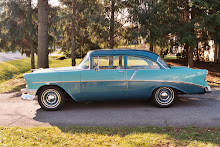
In the midst of watching my way thru the NFL playoffs heading for the Super Bowl, I’ve kicked my usually mild interest up a notch. That’s because, for a change, the teams involved are “real” teams, the way Chevys, Fords and Mopars are “real” cars; they’re from “back in the day!”
Like most folks I have a specific set of criteria for the “reality” of something. For music it’s the Sixties, for cars it’s ’55 thru ’72 (with certain exceptions before and since), for professional football it’s smash-mouth, blue-collar teams from rust-belt towns like Green Bay, Wisconsin or Pittsburg, Pennsylvania. So it’s kind of perfect the Steelers and Packers will meet in Super Bowl XLV, right?
The Green Bay Packers are the second oldest team in the NFL; they’ve been around since 1919 and in what became the NFL since 1921. They’ve won more league championships (12) than any other team and won the first two Super Bowls (1967 & 1968). The Steelers are the oldest team in the AFC and have been in the NFL since 1933. They have won more Super Bowls (6) than any other team.
The Packers and Steelers are to professional football what the Yankees and Cubs are to baseball, true American icons. In that regard they sit on the same shelf as the cars we love so much; Chevrolet, Ford, and Mopar are the Packers and Steelers of their league. In each of these leagues there are lots of other teams but none of the others are any more representative of what their league stands for; what we think of when we think of football or car.
If Chevrolet, Ford, Mopar are the premier teams in their league, the “57 Chevy, the ‘64½ Mustang, the ’68 Roadrunner are examples of their teams’ star players. Like their teams, these “players” are icons. Think of the football icons the Packers have given us; Vince Lombardi, Bart Starr, Ray Nitschke. Or the Steelers like Terry Bradshaw, Franco Harris, “Mean” Joe Green. Take any of these guys to a car show and I’ll bet you’d draw as big a crowd as if you showed up with a ’69 Yenko Camaro or a ’70 Hemi ‘Cuda!
Anyway, I’m pretty fired-up about a Super Bowl that features the Green Bay Packers against the Pittsburgh Steelers. Now if they could get Linda Ronstadt to sing the Star-spangled Banner, the Beach Boys for the half-time show, and play commercials about “seeing the USA in our Chevrolet” or Plymouth ads featuring the Roadrunner and Wylie Coyote, maybe I could take my mind off things I don’t understand (like I-pods, supplemental Medicare insurance, etc.) and really enjoy the game.
Oh, by the way: One of the things I don’t understand is all the fuss about us old people dragging down the economy; depending on our kids’ contributions to Social Security, etc. to fund our lavish retired lifestyles. I mean, aren’t we plowing all that pension money back into the economy? It ain’t 30 and 40-somethings buying all those resto-mod parts, putting gas in 50-year old cars with big-block, dual-quad motors, driving to Nashville just to hang out a few days then turn around and drive back.
Check out the next car show (or remember the last one); those shiny, expensive, extravagantly appointed cruisin’ vessels aren’t owned by kids. As a matter of fact, it seems to me the younger folks at car shows are the ones sportin’ the rat-rods. They’re not spending big bucks fixing up cars, they’re using left-over parts. They’re not even painting their cars!
Yes, I believe all responsible car people should do everything possible to keep the economy afloat. If it means buying the expensive billet wheels instead of repainting the stock steelies and polishing up the dog dish hub caps, do it!
Since Politics and Economics seem to be so closely related, perhaps responsible car people should think about a political party that represents their point of view; maybe a party with a shade tree for a symbol.
Tuesday, February 1, 2011

Sunday, December 12, 2010
Confessions of a Drugstore Car Guy
Elayne & I recently returned from our road trip out west; 7050 pretty much trouble-free miles. Don’t kid yourself, that many miles in a car ain’t the “pleasure” it once was; if it ever was. We were traveling in a PT Cruiser so the quality of ride might not have been quite as nice as if it had been in a big luxo-cruiser by Mercedes, Cadillac or Lincoln, for instance. But we’re not complaining; you run whatcha brung! We stayed in motels all across the country and Elayne is pleased to report not a bed bug in sight (she looked, too!)
There was a lot of family business that got transacted, what with birthdays and Thanksgiving and all but that stuff doesn’t really matter here. There was, however, quite a bit of car guy stuff too. My brother-in-law, Max, retired recently and bought himself a new Dodge Challenger with a Hemi and 20” Cragars, etc. So it was incumbent upon me to make sure he was fully indoctrinated in the car culture in his A.O. (area of operation). I kept him busy damn-near the whole time we were in the Phoenix area.
I was at a huge disadvantage on this trip because I was unplugged from the Internet; it’s amazing how much we’ve grown to depend on the web as an information source. Almost to the point where there’s no alternative. So I reconnected with newspapers, road maps and telephone books. Kind of a stone age vacation, getting back to my roots and all! As tough as it was, I managed to find car events, places to eat and other normally web-delivered info the old fashioned way.
The first weekend we were in Phoenix I convinced Max we needed to check out the drag racing and car show at Speedworld Raceway Park in nearby Wittmann, Arizona. Back in the day this was Mel Larson’s Dragstrip and the place both Max and I were first introduced to drag racing. Today Speedworld is not a whole lot fancier than it was when it was Mel Larson’s but it’s a lot more comprehensive, including tracks for motocross, BMX, short course off-road racing, sand drags and a mud bog. There’s also facilities for radio-controlled models and paintball. See: http://racespeedworld.com/
I convinced Max he had to enter his Challenger in the car show and it, along with another, almost identical Challenger, proudly represented the resurgence of the muscle car. All of the remaining maybe 100 cars were considerably older. It was a pretty good show with lots of neat cars of every persuasion. I made another reconnection (besides my return to Mel Larson’s) while at Speedworld.
I saw a familiar decal on the window of a ’57 Chevy making a pass on the dragstrip and had another blast from my past. The decal was the logo for the Arizona Drag Racing Association, both of which (logo and association) I’d forgotten long ago. Back in 1972 I got involved with the ADRA in an effort to bring racing to the Air Force base where I worked. One thing led to another and I wound up designing a logo for the organization.
Well, ADRA no longer uses the logo and no one from those days is still active but a few years ago the old logo was reprised to commemorate the 35th anniversary. That commemorative decal is what I saw on the ’57 Chevy. Since then I’ve talked with the current ADRA President and decimated his supply of logo decals. Small world, huh? Elayne actually remembers more details regarding my relationship with ADRA than I do (a mind is a terrible thing to lose!) See: http://www.metzcon.com/adra/index.htm
The weekend after our trip to Speedworld, Max and I went to the Goodguys Southwest Nationals at Westworld in Scottsdale, AZ. We walked our legs to stumps and saw maybe half the vendors and about a quarter of the cars. They said there’d be over 2000 cars in attendance and I’m sure there were at least that many. I’d have taken lots of pictures but I figured someone else already did that and I could see them in the Goodguys magazine (which I consider the best car mag around). See: http://www.southwestnats.com/.
There were several other car shows in the vicinity while I was in Phoenix and I checked-out a couple. One of them, in a Golden Corral parking lot just flat broke my heart. It was on a Saturday morning and convened to raise money and stuff for a local food bank. There were a grand total of eight cars on display and room for a whopping four more! There ain’t no shortage of show fodder in the neighborhood, just, apparently, a lack of communication. I also drove by a show that was being held in conjunction with a local carnival in Buckeye, AZ. They had a lot better turn-out and some pretty nice looking cars.
We’ve all heard about “Arizona cars” and there are lots of older cars on the road as daily drivers. I also noticed that the SUV and pickup crowd has enthusiastically embraced the Big Wheel fad; lots and lots of 22 and 24 inch wheels on late model vehicles. I even saw some of those monster hoops on regular cars. Oh well, different strokes for different folks, I guess.
While in Arizona I took a road trip with my friend Merle, to check-out some of the country I hadn’t seen in a few years. We stopped in Casa Grande, AZ to see if Patrick’s Antique Cars & Trucks was really selling off their stock of 47-54 Chevy trucks (they weren’t, according to Patrick’s son). See: http://www.patricksantiquecars.com/.
We enjoyed our visit to Arizona, especially the days in the seventies with lots and lots of sunshine. I enjoyed reconnecting with some places I remembered and some things I’d forgotten. It’ll probably be a couple of years before we’re ready to go back and I’m not sure either Elayne or I am up to making that long, long drive. I do remember how to get to and from the airport, however, having made several trips picking-up or dropping-off my kid & grandkids who were smart enough to fly.
There was a lot of family business that got transacted, what with birthdays and Thanksgiving and all but that stuff doesn’t really matter here. There was, however, quite a bit of car guy stuff too. My brother-in-law, Max, retired recently and bought himself a new Dodge Challenger with a Hemi and 20” Cragars, etc. So it was incumbent upon me to make sure he was fully indoctrinated in the car culture in his A.O. (area of operation). I kept him busy damn-near the whole time we were in the Phoenix area.
I was at a huge disadvantage on this trip because I was unplugged from the Internet; it’s amazing how much we’ve grown to depend on the web as an information source. Almost to the point where there’s no alternative. So I reconnected with newspapers, road maps and telephone books. Kind of a stone age vacation, getting back to my roots and all! As tough as it was, I managed to find car events, places to eat and other normally web-delivered info the old fashioned way.
The first weekend we were in Phoenix I convinced Max we needed to check out the drag racing and car show at Speedworld Raceway Park in nearby Wittmann, Arizona. Back in the day this was Mel Larson’s Dragstrip and the place both Max and I were first introduced to drag racing. Today Speedworld is not a whole lot fancier than it was when it was Mel Larson’s but it’s a lot more comprehensive, including tracks for motocross, BMX, short course off-road racing, sand drags and a mud bog. There’s also facilities for radio-controlled models and paintball. See: http://racespeedworld.com/
I convinced Max he had to enter his Challenger in the car show and it, along with another, almost identical Challenger, proudly represented the resurgence of the muscle car. All of the remaining maybe 100 cars were considerably older. It was a pretty good show with lots of neat cars of every persuasion. I made another reconnection (besides my return to Mel Larson’s) while at Speedworld.
I saw a familiar decal on the window of a ’57 Chevy making a pass on the dragstrip and had another blast from my past. The decal was the logo for the Arizona Drag Racing Association, both of which (logo and association) I’d forgotten long ago. Back in 1972 I got involved with the ADRA in an effort to bring racing to the Air Force base where I worked. One thing led to another and I wound up designing a logo for the organization.
Well, ADRA no longer uses the logo and no one from those days is still active but a few years ago the old logo was reprised to commemorate the 35th anniversary. That commemorative decal is what I saw on the ’57 Chevy. Since then I’ve talked with the current ADRA President and decimated his supply of logo decals. Small world, huh? Elayne actually remembers more details regarding my relationship with ADRA than I do (a mind is a terrible thing to lose!) See: http://www.metzcon.com/adra/index.htm
The weekend after our trip to Speedworld, Max and I went to the Goodguys Southwest Nationals at Westworld in Scottsdale, AZ. We walked our legs to stumps and saw maybe half the vendors and about a quarter of the cars. They said there’d be over 2000 cars in attendance and I’m sure there were at least that many. I’d have taken lots of pictures but I figured someone else already did that and I could see them in the Goodguys magazine (which I consider the best car mag around). See: http://www.southwestnats.com/.
There were several other car shows in the vicinity while I was in Phoenix and I checked-out a couple. One of them, in a Golden Corral parking lot just flat broke my heart. It was on a Saturday morning and convened to raise money and stuff for a local food bank. There were a grand total of eight cars on display and room for a whopping four more! There ain’t no shortage of show fodder in the neighborhood, just, apparently, a lack of communication. I also drove by a show that was being held in conjunction with a local carnival in Buckeye, AZ. They had a lot better turn-out and some pretty nice looking cars.
We’ve all heard about “Arizona cars” and there are lots of older cars on the road as daily drivers. I also noticed that the SUV and pickup crowd has enthusiastically embraced the Big Wheel fad; lots and lots of 22 and 24 inch wheels on late model vehicles. I even saw some of those monster hoops on regular cars. Oh well, different strokes for different folks, I guess.
While in Arizona I took a road trip with my friend Merle, to check-out some of the country I hadn’t seen in a few years. We stopped in Casa Grande, AZ to see if Patrick’s Antique Cars & Trucks was really selling off their stock of 47-54 Chevy trucks (they weren’t, according to Patrick’s son). See: http://www.patricksantiquecars.com/.
We enjoyed our visit to Arizona, especially the days in the seventies with lots and lots of sunshine. I enjoyed reconnecting with some places I remembered and some things I’d forgotten. It’ll probably be a couple of years before we’re ready to go back and I’m not sure either Elayne or I am up to making that long, long drive. I do remember how to get to and from the airport, however, having made several trips picking-up or dropping-off my kid & grandkids who were smart enough to fly.
Tuesday, October 26, 2010
Carlisle Auction Experience Reflects Dismal Collector/Classic Car Market
By Linda Riggs
Sec'y, Heart of Maryland Classic Chevy Club
After having our ’57 wagon for sale for several months, Jim & I decided to consign the wagon to the Carlisle Fall Auctions. We know that the wagon shows much better in person than in print or on the internet. In consigning to auction, we had to decide whether to have a reserve placed on the car (duh) and then whether to have it auctioned during “prime time” of 5:00 - 9:00 pm on Thursday or Friday.
We opted for a reserve and for prime time, and paid the consignment fee to Carlisle Productions. For the consignment fee, Carlisle Auctions promotes the consigned cars and features them on www.carlisleauctions.com. They also pre-qualify the bidders, and the successful bidder makes their check payable to Carlisle Productions. Carlisle Productions holds the title until the payment is processed. About 2 weeks after the auction, once the payment is successfully transferred, the seller receives a check from Carlisle Productions. This, to us, seemed a safer way to conduct the transaction than the possibility of us accepting a fraudulent cashier’s check. Also for our consignment fees, we would receive two passes to the auctions and Fall Carlisle. I think they hoped we would bid on a car to replace the one we were selling! Not!
In any case, we consigned the wagon and were told to have the wagon, keys, clear original title and other paperwork at the Carlisle Expo Center on Tuesday, September 28. The weekend before that we cleaned and detailed the wagon and she looked fantastic. It was a bittersweet weekend—we realized it might be the last time that we worked together on her. But we also knew that we really needed the additional room in the shop (we were very tired of having to do the garage shuffle every time we wanted to work on a car) and Frederick County was not going to allow us to enlarge the shop, especially since it was already a non-conforming structure according to the new zoning rules.
After spending the weekend cleaning up the wagon the weatherman decided to throw a curveball at us and it rained heavily all day Monday with more rain called for on Tuesday. Instead of driving the car to Carlisle as we had planned, we asked Ed Z to trailer it to Carlisle for us so our hard work was not in vain. THANKS, EZ!
The weekend before the Carlisle Auction was Barrett-Jackson Las Vegas. We watched some of the Speed Channels coverage of Barrett-Jackson and we were both discouraged and encouraged. There was a nice ’55 210 wagon that sold for $55,000 but there were other cars that appeared to be very nice that didn’t bring much. Not knowing what to expect, or even if we would get any bids, we headed up to Carlisle on Tuesday afternoon; a bit nervous and apprehensive.
Check in went well. In fact, we were rather surprised at how quickly it went. The guys checking in the cars really liked the wagon and the security guys promised to keep an eye on her and assured us that they had never lost one. The only thing we didn’t like was that the cars are kept outside but we figured when we go to conventions the cars are outside and there isn’t 24/7 gated security.
On Thursday, September 30 we returned to Carlisle in pouring rain, the remnants of a tropical storm. It was very cold, wet and dreary; not a great day for an auto auction. We checked on the wagon and all was good. She attracted a lot of attention in the parking lot. We had a seat in the auction room and watched some auction action. After about the 10th or 12th car, I turned to Jim and told him we would not be selling the wagon that day. He agreed. None of the bidders were taking their hands out of their pockets to bid. The only cars selling were in the $1,500 to $10,000 range.
A very nice original ’55 Chevy Pickup only got the bidding up to $12,000 and was not sold. Several nice Chevelles, Camaros and Corvettes were not sold. Nothing of any value was selling although the auction room was absolutely packed. The wagon was #74 and I doubt that they sold even 20 cars that day. The only thing we could figure is that it was so rainy that a lot of people from the flea market at the fairgrounds were taking refuge in the dry auction house and were not there to bid.
So, at 7:00 pm, when the wagon rolled over the auction block, we were not a bit surprised when the bidding only got up to $20,000. Standing in line to go on the block people were all over the car, taking pictures, admiring the interior, loving the paint colors, wheels, under the hood. As she rolled on the block there was an audible buzz in the room and people were taking pictures. She was the only ’57 Chevy in the auction but still brought few bids. The bidding stalled and out she went. Afterwards, several people came up to us and said the car was just too nice for that auction, that day.
On the plus side, as registered participants, we received access to the hospitality area with a nice hot buffet and drinks. It was good food on a miserable day. Not worth the price of admission but at least we got something, besides the experience, out of the day!
Since it was still pouring after the auction, we left the wagon so we would not have to drive home in the pouring rain at night. Chris from Carlisle Auctions came up to us and encouraged us to leave the wagon until Friday’s auction—he said he was sure we would get some offers once the sun came out and people could appreciate the car. Skeptical, we decided to come back Friday afternoon to pick up the wagon. When we did we, watched some of the auction. Even though the sun was shining and it was a beautiful day the sales were just as dismal as on Thursday. It did not seem to matter whether the vehicle was a car or truck or motorcycle, an AACA National Champion or a Pro-Street vehicle, nothing was selling.
Again, in the parking lot, the wagon got a lot of attention. But, since this wasn’t a car show, it really didn’t matter! We loaded up the wagon, put the tags back on and headed home.
So the wagon is still for sale and we’ll keep doing the garage shuffle every time we need to work on a vehicle. The Carlisle Auction was quite an experience, but one we will not repeat. I know it’s the economy, but we were disappointed. Not just for ourselves, but it isn’t much fun to go to an auction where nothing sells!
Sec'y, Heart of Maryland Classic Chevy Club
After having our ’57 wagon for sale for several months, Jim & I decided to consign the wagon to the Carlisle Fall Auctions. We know that the wagon shows much better in person than in print or on the internet. In consigning to auction, we had to decide whether to have a reserve placed on the car (duh) and then whether to have it auctioned during “prime time” of 5:00 - 9:00 pm on Thursday or Friday.
We opted for a reserve and for prime time, and paid the consignment fee to Carlisle Productions. For the consignment fee, Carlisle Auctions promotes the consigned cars and features them on www.carlisleauctions.com. They also pre-qualify the bidders, and the successful bidder makes their check payable to Carlisle Productions. Carlisle Productions holds the title until the payment is processed. About 2 weeks after the auction, once the payment is successfully transferred, the seller receives a check from Carlisle Productions. This, to us, seemed a safer way to conduct the transaction than the possibility of us accepting a fraudulent cashier’s check. Also for our consignment fees, we would receive two passes to the auctions and Fall Carlisle. I think they hoped we would bid on a car to replace the one we were selling! Not!
In any case, we consigned the wagon and were told to have the wagon, keys, clear original title and other paperwork at the Carlisle Expo Center on Tuesday, September 28. The weekend before that we cleaned and detailed the wagon and she looked fantastic. It was a bittersweet weekend—we realized it might be the last time that we worked together on her. But we also knew that we really needed the additional room in the shop (we were very tired of having to do the garage shuffle every time we wanted to work on a car) and Frederick County was not going to allow us to enlarge the shop, especially since it was already a non-conforming structure according to the new zoning rules.
After spending the weekend cleaning up the wagon the weatherman decided to throw a curveball at us and it rained heavily all day Monday with more rain called for on Tuesday. Instead of driving the car to Carlisle as we had planned, we asked Ed Z to trailer it to Carlisle for us so our hard work was not in vain. THANKS, EZ!
The weekend before the Carlisle Auction was Barrett-Jackson Las Vegas. We watched some of the Speed Channels coverage of Barrett-Jackson and we were both discouraged and encouraged. There was a nice ’55 210 wagon that sold for $55,000 but there were other cars that appeared to be very nice that didn’t bring much. Not knowing what to expect, or even if we would get any bids, we headed up to Carlisle on Tuesday afternoon; a bit nervous and apprehensive.
Check in went well. In fact, we were rather surprised at how quickly it went. The guys checking in the cars really liked the wagon and the security guys promised to keep an eye on her and assured us that they had never lost one. The only thing we didn’t like was that the cars are kept outside but we figured when we go to conventions the cars are outside and there isn’t 24/7 gated security.
On Thursday, September 30 we returned to Carlisle in pouring rain, the remnants of a tropical storm. It was very cold, wet and dreary; not a great day for an auto auction. We checked on the wagon and all was good. She attracted a lot of attention in the parking lot. We had a seat in the auction room and watched some auction action. After about the 10th or 12th car, I turned to Jim and told him we would not be selling the wagon that day. He agreed. None of the bidders were taking their hands out of their pockets to bid. The only cars selling were in the $1,500 to $10,000 range.
A very nice original ’55 Chevy Pickup only got the bidding up to $12,000 and was not sold. Several nice Chevelles, Camaros and Corvettes were not sold. Nothing of any value was selling although the auction room was absolutely packed. The wagon was #74 and I doubt that they sold even 20 cars that day. The only thing we could figure is that it was so rainy that a lot of people from the flea market at the fairgrounds were taking refuge in the dry auction house and were not there to bid.
So, at 7:00 pm, when the wagon rolled over the auction block, we were not a bit surprised when the bidding only got up to $20,000. Standing in line to go on the block people were all over the car, taking pictures, admiring the interior, loving the paint colors, wheels, under the hood. As she rolled on the block there was an audible buzz in the room and people were taking pictures. She was the only ’57 Chevy in the auction but still brought few bids. The bidding stalled and out she went. Afterwards, several people came up to us and said the car was just too nice for that auction, that day.
On the plus side, as registered participants, we received access to the hospitality area with a nice hot buffet and drinks. It was good food on a miserable day. Not worth the price of admission but at least we got something, besides the experience, out of the day!
Since it was still pouring after the auction, we left the wagon so we would not have to drive home in the pouring rain at night. Chris from Carlisle Auctions came up to us and encouraged us to leave the wagon until Friday’s auction—he said he was sure we would get some offers once the sun came out and people could appreciate the car. Skeptical, we decided to come back Friday afternoon to pick up the wagon. When we did we, watched some of the auction. Even though the sun was shining and it was a beautiful day the sales were just as dismal as on Thursday. It did not seem to matter whether the vehicle was a car or truck or motorcycle, an AACA National Champion or a Pro-Street vehicle, nothing was selling.
Again, in the parking lot, the wagon got a lot of attention. But, since this wasn’t a car show, it really didn’t matter! We loaded up the wagon, put the tags back on and headed home.
So the wagon is still for sale and we’ll keep doing the garage shuffle every time we need to work on a vehicle. The Carlisle Auction was quite an experience, but one we will not repeat. I know it’s the economy, but we were disappointed. Not just for ourselves, but it isn’t much fun to go to an auction where nothing sells!
Confessions of a Drugstore Car Guy
When I got my Super Chevy magazine last month, the cover immediately caught my attention, just as intended. Specifically, I saw headlines announcing the imminent threat of government action against me and my old car. The reason my attention was grabbed, according to automotive aftermarket mouthpiece, SEMA:
“Source Interlink Media, publisher of automotive specialty niche brands with more than 50 titles and 60 websites, is devoting each of its performance automotive group publication titles to the laws and regulations affecting the enjoyment of the automotive hobby. The themed issues are scheduled to hit newsstands in September and October—in time for the November 2010 elections—and will encourage the nearly 50 million readers to exercise their right to be heard.”
Why? According to SEMA:
“It is clear from the constant stream of anti-automobile enthusiast legislation across the country that, in order for the automotive hobbies to survive the present, let alone flourish in the future, hobbyists must work toward becoming more politically involved and effective. Most importantly, hobbyists must learn to work the system. Auto enthusiasts and clubs must learn to lobby.”
Why now?
“We are again at an election crossroads in which many voters are seeking change,” said Doug Evans, Source Interlink Media’s senior vice president and group publisher, performance automotive group. “These issues of our automotive magazines will give our readers an opportunity to consider how actions being taken by federal and state lawmakers impact the auto enthusiast. The need for the enthusiast community to stay informed and become involved is greater than ever. From emissions to auto equipment standards, the government is making decisions about your current and future car.”
“The people who love musclecars, hot rods, street rods, tuners, replicas, off-road trucks and many other varieties of automotive pursuits are as diverse as the country in which we live,” said SEMA Board Chairman Rick Rollins. “We must work to protect our automotive passions from unnecessary, unfair or well-intentioned but poorly written laws and regulations. Fortunately, we live in a country where we can still make a difference in how we are governed.
"Our greatest tool in making that difference is our voice. By speaking out on issues that concern the automotive hobby, contacting our representatives and working constructively with government officials, we have the power to protect our passion and keep it safe for future generations of auto hobbyists and enthusiasts.”
The future of the hobby depends on those who enjoy it. The ballot box is one venue for making views known. Enthusiasts can also work collectively by joining the SEMA Action Network (SAN), which is a partnership between enthusiasts, car clubs and members of the specialty auto parts industry in the United States and Canada who have pledged to join forces in support of legislative solutions for the auto hobby. It’s free to join and the SAN keeps you informed about pending legislation and regulations—both good and bad—that will impact your state or the entire country.
“We are the destination for millions of enthusiasts and consumers looking to find anything and everything about their enthusiast lifestyle,” Evans added. “Nowhere else can you find more powerful and credible brands specifically targeted to the needs and passions of our readers. We owe it to these dedicated readers to let them know about the threats to their hobby and solutions they can help enact to protect it.”
What’s the point?
While I have no problem with the idea that people should be involved in issues that affect, or even simply interest, them, I do have a problem with getting their attention with the printed equivalent of shouting “Fire!” in a crowded theater.
In the last month or so, each of the publications in the Source Interlink Media stable featured a cover similar to that on my Super Chevy. In dramatic fashion each reader received what appeared to be a 9-1-1 call warning them of the impending end of life as they know it. Those who read on found a lot of sound and fury signifying nothing; SEMA and Source Interlink Media simply wanted to get our attention.
I suppose the motivation behind this campaign can be taken at face value, they just want to reinforce the Civics lessons we learned back in high school. But I kinda doubt that. Why would SEMA spend all that money, go to so much effort, just to be good citizens helping us become better citizens?
The businesses for whom SEMA works are not all negatively impacted by automotive-related legislation. I believe SEMA and its clients are no more opposed to draconian legislation than Accountants are to incomprehensible tax laws; government rules and regulations are the geese laying their golden eggs.
Although many SEMA members are car guys and share some of the same interests and fears we do, the organization’s primary purpose is securing preferential treatment for its “special interests.” Before we let them talk us into getting a manicure, fancy haircut, and shiny suit; before we go schmooze a Congressman, let’s think about what’s in it for SEMA.
What are SEMA’s special interests and are they the same as ours? Is the sky really falling or is Chicken Little just trying to impress America’s legislative bodies with how many friends he’s got on his facebook page?
“Source Interlink Media, publisher of automotive specialty niche brands with more than 50 titles and 60 websites, is devoting each of its performance automotive group publication titles to the laws and regulations affecting the enjoyment of the automotive hobby. The themed issues are scheduled to hit newsstands in September and October—in time for the November 2010 elections—and will encourage the nearly 50 million readers to exercise their right to be heard.”
Why? According to SEMA:
“It is clear from the constant stream of anti-automobile enthusiast legislation across the country that, in order for the automotive hobbies to survive the present, let alone flourish in the future, hobbyists must work toward becoming more politically involved and effective. Most importantly, hobbyists must learn to work the system. Auto enthusiasts and clubs must learn to lobby.”
Why now?
“We are again at an election crossroads in which many voters are seeking change,” said Doug Evans, Source Interlink Media’s senior vice president and group publisher, performance automotive group. “These issues of our automotive magazines will give our readers an opportunity to consider how actions being taken by federal and state lawmakers impact the auto enthusiast. The need for the enthusiast community to stay informed and become involved is greater than ever. From emissions to auto equipment standards, the government is making decisions about your current and future car.”
“The people who love musclecars, hot rods, street rods, tuners, replicas, off-road trucks and many other varieties of automotive pursuits are as diverse as the country in which we live,” said SEMA Board Chairman Rick Rollins. “We must work to protect our automotive passions from unnecessary, unfair or well-intentioned but poorly written laws and regulations. Fortunately, we live in a country where we can still make a difference in how we are governed.
"Our greatest tool in making that difference is our voice. By speaking out on issues that concern the automotive hobby, contacting our representatives and working constructively with government officials, we have the power to protect our passion and keep it safe for future generations of auto hobbyists and enthusiasts.”
The future of the hobby depends on those who enjoy it. The ballot box is one venue for making views known. Enthusiasts can also work collectively by joining the SEMA Action Network (SAN), which is a partnership between enthusiasts, car clubs and members of the specialty auto parts industry in the United States and Canada who have pledged to join forces in support of legislative solutions for the auto hobby. It’s free to join and the SAN keeps you informed about pending legislation and regulations—both good and bad—that will impact your state or the entire country.
“We are the destination for millions of enthusiasts and consumers looking to find anything and everything about their enthusiast lifestyle,” Evans added. “Nowhere else can you find more powerful and credible brands specifically targeted to the needs and passions of our readers. We owe it to these dedicated readers to let them know about the threats to their hobby and solutions they can help enact to protect it.”
What’s the point?
While I have no problem with the idea that people should be involved in issues that affect, or even simply interest, them, I do have a problem with getting their attention with the printed equivalent of shouting “Fire!” in a crowded theater.
In the last month or so, each of the publications in the Source Interlink Media stable featured a cover similar to that on my Super Chevy. In dramatic fashion each reader received what appeared to be a 9-1-1 call warning them of the impending end of life as they know it. Those who read on found a lot of sound and fury signifying nothing; SEMA and Source Interlink Media simply wanted to get our attention.
I suppose the motivation behind this campaign can be taken at face value, they just want to reinforce the Civics lessons we learned back in high school. But I kinda doubt that. Why would SEMA spend all that money, go to so much effort, just to be good citizens helping us become better citizens?
The businesses for whom SEMA works are not all negatively impacted by automotive-related legislation. I believe SEMA and its clients are no more opposed to draconian legislation than Accountants are to incomprehensible tax laws; government rules and regulations are the geese laying their golden eggs.
Although many SEMA members are car guys and share some of the same interests and fears we do, the organization’s primary purpose is securing preferential treatment for its “special interests.” Before we let them talk us into getting a manicure, fancy haircut, and shiny suit; before we go schmooze a Congressman, let’s think about what’s in it for SEMA.
What are SEMA’s special interests and are they the same as ours? Is the sky really falling or is Chicken Little just trying to impress America’s legislative bodies with how many friends he’s got on his facebook page?
Sunday, September 26, 2010
Confessions of a Drugstore Car Guy
The 18th Annual Alzheimer’s Show happened last Sunday and I missed it! I didn’t mean to, had every intention of being there and doing my part to make sure everything went off without a hitch. I even spent Saturday cleaning-up my Old Car, getting it ready for the show. That evening I didn’t feel so hot and went to bed early and Sunday morning I felt worse. So I stayed home hoping to: 1) recover quickly and 2) not infect anyone else.
Missing the club’s signature event, the culmination of nearly a year’s work, just because I felt rotten has made me feel really guilty. Oh, I feel better otherwise, I’ve apparently gotten over whatever ailed me but the guilt’s a significant burden. If I was sick, you ask, why should I feel guilty? Because I know there were a number of others working at the Show who probably felt as bad, if not worse, than I did.
Not to name names, or to embarrass anyone, but I know there were bad backs, hips and knees, recent surgeries and chronic conditions out there toiling among the able bodied. The thing that makes an event like the Alzheimer’s Show a success is the level of commitment of the people behind the event; those working their butts off anonymously because they care. HMCCC and the Alzheimer’s Association is fortunate that there are a bunch of people who really care and are committed to making this event a success.
I don’t know if my absence had any impact on this year’s Show, I suspect that it didn’t; the number of cars and their people, the amount of money collected for Alzheimers research, the good times had by all, probably didn’t suffer. I’m not even sure very many people knew I wasn’t there. In this case it is good not to be missed.
I’d like to think that they had to settle for second best when awarding “Best of Show” because my car wasn’t there but the car probably wasn’t missed any more than I was. Well, maybe a little more; my yellow broomstick hood prop-rod has a number of fans!
Next year I’ll take my vitamins, drink lots of orange juice, get plenty of sleep and exercise. If I live right and mind my “p’s & q’s” I should be good to go come time for the 19th Annual Alzheimer’s Show. It is, after all, a great cause and one that becomes increasingly important as we all get older. I will be there and doing my part; I really don’t like feeling guilty like this.
For Show coverage and PICTURES! go to:http://www.hmccc.50g.com/. There is also a slide show @ ttp://www.flickr.com/photos/flymall/sets/72157624879717331/show/. Flyers about upcoming shows at http://www.flymall.org/events/. Search the calendar by key words or have the calendar send you an email reminder about a show you want to attend. For more information see http://www.flymall.org/.
Missing the club’s signature event, the culmination of nearly a year’s work, just because I felt rotten has made me feel really guilty. Oh, I feel better otherwise, I’ve apparently gotten over whatever ailed me but the guilt’s a significant burden. If I was sick, you ask, why should I feel guilty? Because I know there were a number of others working at the Show who probably felt as bad, if not worse, than I did.
Not to name names, or to embarrass anyone, but I know there were bad backs, hips and knees, recent surgeries and chronic conditions out there toiling among the able bodied. The thing that makes an event like the Alzheimer’s Show a success is the level of commitment of the people behind the event; those working their butts off anonymously because they care. HMCCC and the Alzheimer’s Association is fortunate that there are a bunch of people who really care and are committed to making this event a success.
I don’t know if my absence had any impact on this year’s Show, I suspect that it didn’t; the number of cars and their people, the amount of money collected for Alzheimers research, the good times had by all, probably didn’t suffer. I’m not even sure very many people knew I wasn’t there. In this case it is good not to be missed.
I’d like to think that they had to settle for second best when awarding “Best of Show” because my car wasn’t there but the car probably wasn’t missed any more than I was. Well, maybe a little more; my yellow broomstick hood prop-rod has a number of fans!
Next year I’ll take my vitamins, drink lots of orange juice, get plenty of sleep and exercise. If I live right and mind my “p’s & q’s” I should be good to go come time for the 19th Annual Alzheimer’s Show. It is, after all, a great cause and one that becomes increasingly important as we all get older. I will be there and doing my part; I really don’t like feeling guilty like this.
For Show coverage and PICTURES! go to:http://www.hmccc.50g.com/. There is also a slide show @ ttp://www.flickr.com/photos/flymall/sets/72157624879717331/show/. Flyers about upcoming shows at http://www.flymall.org/events/. Search the calendar by key words or have the calendar send you an email reminder about a show you want to attend. For more information see http://www.flymall.org/.
Saturday, August 28, 2010
Confessions/Roads Scholar BOGO
I’ve been making plans for a road trip. We haven’t been out west for over a year and it’s time. This trip will combine several destinations and we’ll be gone for just over a month. I tend to do a lot of planning for trips like this because, to tell the truth, I like that almost as much as I do the trip itself.
My father always spent time planning our family trips and we took one just about every year. In those days he had to do it the old-fashioned way, with road maps and a note pad. He always had a collection of road maps handy and we’d pick-up new ones in each state we traveled thru. My travel agent is the world-wide-web.
Back in the day we got to a town in which were going to stay the night and found a motel by neon “vacancy” sign. My parents based their choice on availability and their reaction to the looks of the place from the parking lot.
Yesterday I booked rooms in six different cities and states on-line. Before I chose a place I looked at photos of the property and read reviews. I considered which properties were most convenient to my planned route, what restaurants were near-by as well as what the rooms cost.
After a couple of hours of surfing I have confirmed reservations for rooms in Indiana, Kansas, New Mexico, Texas, Louisiana and North Carolina. I know how to get from my route of choice to my room of choice. I know how far it is between stops (an average of 573 miles) and the accumulated mileage (5159 miles). MapQuest even estimates fuel expense based on miles traveled, mpg and average gas prices ($688). How did we live before the Internet?
One of the first family trips I planned was to Colorado Springs from Phoenix back in 1971. I didn’t make lodging reservations for the one night we planned to spend on the road to Colorado because I knew we’d find a place the old-fashioned “vacancy” sign way.
There wasn’t a room available between Cortez and Colorado Springs, however, (it was Rodeo Season) and we wound up driving straight thru (777 miles according to Google maps). We arrived at 0-dark-30 the next morning and my son, who was only about a year old at the time, was sick. Elayne wasn’t happy and I haven’t left home without reservations since!
Not long after the Colorado Trip I was involved in planning another trip, this one to include the entire family, a four wheel drive caravan to Alaska! We’d all get together for Sunday dinner at my in-laws and B.S. about what we’d need to make the epic trek up and down the Alcan Highway to Alaska and back.
Around this time my Uncle Donald retired from the Alaska State Highway Department and moved to the desert near us. Naturally we invited him to our Sunday dinner and planning session. Well, Donald confirmed our notion that a lot of planning was required to drive to or from the lower 48 (that what Alaskans call the rest of the country). To illustrate he recalled the time he was unpacking the trunk of his car following a drive from Anchorage to Seattle and found he hadn’t brought a spare tire.
I know planning people will tell you that it takes careful planning to make sure you’ve got all the essentials and to eliminate the non-essentials. That’s hogwash! The more/better the planning, the more junk you’ll have, period. Uncle Donald would not have had room for Aunt Irene’s crafts (gifts for everyone in the family) if he’d planned for a flat tire. He didn’t have a flat so he didn’t need the spare!
On a couple of occasions my friend Bunkie and I traveled together. He was as opposed to planning as I was addicted to it and we worked well together. I’d do all the planning I wanted and he’d either go along with my plans or completely ignore them. When you make a plan it’s really hard not to stick to it. When you don’t do any planning at least you don’t have to worry about the plan not working. I suppose winging-it is just another way of limiting your opportunities to be disappointed.
Back in the Day
A few weeks ago I checked-out a car show at the Boonsboro American Legion Post, getting a twofer in the process; hanging out with some neat cars and their people while making my debut at the Post to which I’d recently transferred my membership. The weather, for a change, moderated and it turned out to be a great day.
There were several El Caminos in attendance and they, coupled with the “remember the war” vibe that hangs around Legion Posts, reminded me of the U-2 chase cars I watched doing their thing at Bien Hoa Air Base in Viet Nam.
The U-2 can’t land by itself because of its extreme wingspan and a bicycle (two wheels in a row) landing gear. They use “pogos” (small wheels on flexible steel legs) to support the wing tip upon landing. This requires someone to put the pogo in place when the plane touches down.
Hence the El Camino chase car and a guy in the back to handle the pogo install! The El Caminos were 1968 SS396 models that earned their keep running down the U-2s as they landed. Watching these USAF hot rods going from zero to gotcha in half the runway convinced me I really wanted an SS396 El Camino when I got back to the World!
My father always spent time planning our family trips and we took one just about every year. In those days he had to do it the old-fashioned way, with road maps and a note pad. He always had a collection of road maps handy and we’d pick-up new ones in each state we traveled thru. My travel agent is the world-wide-web.
Back in the day we got to a town in which were going to stay the night and found a motel by neon “vacancy” sign. My parents based their choice on availability and their reaction to the looks of the place from the parking lot.
Yesterday I booked rooms in six different cities and states on-line. Before I chose a place I looked at photos of the property and read reviews. I considered which properties were most convenient to my planned route, what restaurants were near-by as well as what the rooms cost.
After a couple of hours of surfing I have confirmed reservations for rooms in Indiana, Kansas, New Mexico, Texas, Louisiana and North Carolina. I know how to get from my route of choice to my room of choice. I know how far it is between stops (an average of 573 miles) and the accumulated mileage (5159 miles). MapQuest even estimates fuel expense based on miles traveled, mpg and average gas prices ($688). How did we live before the Internet?
One of the first family trips I planned was to Colorado Springs from Phoenix back in 1971. I didn’t make lodging reservations for the one night we planned to spend on the road to Colorado because I knew we’d find a place the old-fashioned “vacancy” sign way.
There wasn’t a room available between Cortez and Colorado Springs, however, (it was Rodeo Season) and we wound up driving straight thru (777 miles according to Google maps). We arrived at 0-dark-30 the next morning and my son, who was only about a year old at the time, was sick. Elayne wasn’t happy and I haven’t left home without reservations since!
Not long after the Colorado Trip I was involved in planning another trip, this one to include the entire family, a four wheel drive caravan to Alaska! We’d all get together for Sunday dinner at my in-laws and B.S. about what we’d need to make the epic trek up and down the Alcan Highway to Alaska and back.
Around this time my Uncle Donald retired from the Alaska State Highway Department and moved to the desert near us. Naturally we invited him to our Sunday dinner and planning session. Well, Donald confirmed our notion that a lot of planning was required to drive to or from the lower 48 (that what Alaskans call the rest of the country). To illustrate he recalled the time he was unpacking the trunk of his car following a drive from Anchorage to Seattle and found he hadn’t brought a spare tire.
I know planning people will tell you that it takes careful planning to make sure you’ve got all the essentials and to eliminate the non-essentials. That’s hogwash! The more/better the planning, the more junk you’ll have, period. Uncle Donald would not have had room for Aunt Irene’s crafts (gifts for everyone in the family) if he’d planned for a flat tire. He didn’t have a flat so he didn’t need the spare!
On a couple of occasions my friend Bunkie and I traveled together. He was as opposed to planning as I was addicted to it and we worked well together. I’d do all the planning I wanted and he’d either go along with my plans or completely ignore them. When you make a plan it’s really hard not to stick to it. When you don’t do any planning at least you don’t have to worry about the plan not working. I suppose winging-it is just another way of limiting your opportunities to be disappointed.
Back in the Day
A few weeks ago I checked-out a car show at the Boonsboro American Legion Post, getting a twofer in the process; hanging out with some neat cars and their people while making my debut at the Post to which I’d recently transferred my membership. The weather, for a change, moderated and it turned out to be a great day.
There were several El Caminos in attendance and they, coupled with the “remember the war” vibe that hangs around Legion Posts, reminded me of the U-2 chase cars I watched doing their thing at Bien Hoa Air Base in Viet Nam.
The U-2 can’t land by itself because of its extreme wingspan and a bicycle (two wheels in a row) landing gear. They use “pogos” (small wheels on flexible steel legs) to support the wing tip upon landing. This requires someone to put the pogo in place when the plane touches down.
Hence the El Camino chase car and a guy in the back to handle the pogo install! The El Caminos were 1968 SS396 models that earned their keep running down the U-2s as they landed. Watching these USAF hot rods going from zero to gotcha in half the runway convinced me I really wanted an SS396 El Camino when I got back to the World!
Tuesday, July 27, 2010
The Roads Scholar
Tuesday, July 27, 2010
“ . . . The current 55 mph limit results in prevailing speeds of about 65 mph near the Hayward Road intersection.” Frederick News-Post, June 23, 2010.
“ . . . the majority of posted speed limits in speed zones nationwide are much lower than the 85th percentile speed and in many cases lower than the average speed. . . Traffic engineers maintain . . . the limit should be set at a level at or under which 85 percent of people are driving (85th percentile).” National Motorists Association, Speed Limits, A Recommended Speed Zoning Practice.
“ . . . Some states (such as Pennsylvania) have official tolerances.” Wikipedia, Speed Limit Enforcement.
“ . . . It isn't rigidly enforced: they allow +10% +2mph in most cases.” www.safespeed.org.
According to Chaucer and damn near everyone since, “idle hands (are exploited) by the Devil.” Apparently the same goes for idle minds (never mind other body parts)!
The first four citations are just a glimpse of what I found when I got to looking into the fuss being made locally regarding the intersection of U.S.15 and Hayward Road. The last relates to what happens to me when the air is too dirty to go out and play and the heat index is over 100. In any case, the notion of “+10%+2 mph” and “85th percentile” conjures up all sorts of mischief in my obviously under-utilized mind.
You only have to drive up and down Route 15 to verify that most cars (and big trucks) are living up to expectations; driving at the posted 55 mph will get you passed like you’re standing still (if not rear-ended, run off the road or single-fingered saluted). Of course, only an old fart with nowhere to go and in no hurry to get there would even think about going the speed limit. Them and those of us driving classic cars which feel like they’re speeding at 55 mph.
The quote from the Fredrick News-Post states that a posted speed limit will cause traffic to exceed the posted speed by “about” 18%. The NMA, on the other hand, says that most speed limits are set at less than people are going to drive, that it is expected that the limit will be exceeded by 15%. This information also means that the widely accepted “tolerance” of +10%+2mph is not doing us any favors at a speed limit of 55 mph (+10%+2 mph= 62.5 mph). They are expecting us to drive 63.5 (+15%) to 65 (+18%) and allowing us to drive 62.5. We seem to be playing with house money. Except, of course, in the case of Route 15 where nobody seems to be doing much enforcing anyway.
What if we were to apply these built-in margins for excess to other areas of our lives. We could, for instance, understate our income (or overstate our refunds) by 15-18% or 10%+$2 on our tax returns with impunity. That would certainly result in a tidy windfall for taxpayers but probably significantly skew government revenue projections. That’s assuming they haven’t already built in equivalent fudge-factors and make out like bandits if we behave ourselves.
It is a good thing that the wiggle room built into speed limits is not carried-over to other things we measure (I hope). I don’t want to get only 85% of the gas I buy when I fill-up, or pay +10%+$.02 for the gallons I actually get. That would raise the price of a $2.95 gallon to $3.27 or seriously distort my mpg calculations. Now that I think of it, that’s probably exactly how gas mileage estimates are determined!
How do you think newly re-built engines would work if machinists applied these tolerances to our bores and strokes, bearings, etc. Or if a ±10%±2 standard were applied when the points you were awarded by the car show judges were tallied. OK, I guess if you got the + and the other guy got the -. Maybe that’s the answer; if the fudge factor favors you it’s not so bad, if it favors the other guy it ain’t so good.
I certainly don’t want to find out that the fudge factor is built into my blood pressure reading or my temperature (that would make normal anywhere between 87 and 110, either one of which probably means I’m dead). Overall I think I like precision measurements of all things affecting my health. I don’t think I take much comfort in a prognosis that the Doctor is only 85% sure I’ll be around for my next physical.
I really don’t mind that my old car is only 85% done because, at that point I can say I’ve finished. And I accept that, when calculating the cost of fixing-up the car easily cost +10%+$2K more than I willing to admit to spending. Tolerance is really subjective when it comes to the things we measure. I guess the best lesson to take from all of this is that we should always assume that anything anyone tells us, expects of us, or gives us is likely to have some kind of 85%/+10%+2 fudge factor built in and that we’d best assume the bias is against us.
We live in the Information Age, that is the commodity in which we deal. It is starting to look like information is going to have to have a label just like the stuff we get off the shelf in the grocery store. We need to know what percent of what we’re getting is fact and what percent is fudge factor. The information in this piece, for example; is certified (by me) to contain no more than 51% balderdash (with a ±10%±2 margin for wild imagination).
“ . . . The current 55 mph limit results in prevailing speeds of about 65 mph near the Hayward Road intersection.” Frederick News-Post, June 23, 2010.
“ . . . the majority of posted speed limits in speed zones nationwide are much lower than the 85th percentile speed and in many cases lower than the average speed. . . Traffic engineers maintain . . . the limit should be set at a level at or under which 85 percent of people are driving (85th percentile).” National Motorists Association, Speed Limits, A Recommended Speed Zoning Practice.
“ . . . Some states (such as Pennsylvania) have official tolerances.” Wikipedia, Speed Limit Enforcement.
“ . . . It isn't rigidly enforced: they allow +10% +2mph in most cases.” www.safespeed.org.
According to Chaucer and damn near everyone since, “idle hands (are exploited) by the Devil.” Apparently the same goes for idle minds (never mind other body parts)!
The first four citations are just a glimpse of what I found when I got to looking into the fuss being made locally regarding the intersection of U.S.15 and Hayward Road. The last relates to what happens to me when the air is too dirty to go out and play and the heat index is over 100. In any case, the notion of “+10%+2 mph” and “85th percentile” conjures up all sorts of mischief in my obviously under-utilized mind.
You only have to drive up and down Route 15 to verify that most cars (and big trucks) are living up to expectations; driving at the posted 55 mph will get you passed like you’re standing still (if not rear-ended, run off the road or single-fingered saluted). Of course, only an old fart with nowhere to go and in no hurry to get there would even think about going the speed limit. Them and those of us driving classic cars which feel like they’re speeding at 55 mph.
The quote from the Fredrick News-Post states that a posted speed limit will cause traffic to exceed the posted speed by “about” 18%. The NMA, on the other hand, says that most speed limits are set at less than people are going to drive, that it is expected that the limit will be exceeded by 15%. This information also means that the widely accepted “tolerance” of +10%+2mph is not doing us any favors at a speed limit of 55 mph (+10%+2 mph= 62.5 mph). They are expecting us to drive 63.5 (+15%) to 65 (+18%) and allowing us to drive 62.5. We seem to be playing with house money. Except, of course, in the case of Route 15 where nobody seems to be doing much enforcing anyway.
What if we were to apply these built-in margins for excess to other areas of our lives. We could, for instance, understate our income (or overstate our refunds) by 15-18% or 10%+$2 on our tax returns with impunity. That would certainly result in a tidy windfall for taxpayers but probably significantly skew government revenue projections. That’s assuming they haven’t already built in equivalent fudge-factors and make out like bandits if we behave ourselves.
It is a good thing that the wiggle room built into speed limits is not carried-over to other things we measure (I hope). I don’t want to get only 85% of the gas I buy when I fill-up, or pay +10%+$.02 for the gallons I actually get. That would raise the price of a $2.95 gallon to $3.27 or seriously distort my mpg calculations. Now that I think of it, that’s probably exactly how gas mileage estimates are determined!
How do you think newly re-built engines would work if machinists applied these tolerances to our bores and strokes, bearings, etc. Or if a ±10%±2 standard were applied when the points you were awarded by the car show judges were tallied. OK, I guess if you got the + and the other guy got the -. Maybe that’s the answer; if the fudge factor favors you it’s not so bad, if it favors the other guy it ain’t so good.
I certainly don’t want to find out that the fudge factor is built into my blood pressure reading or my temperature (that would make normal anywhere between 87 and 110, either one of which probably means I’m dead). Overall I think I like precision measurements of all things affecting my health. I don’t think I take much comfort in a prognosis that the Doctor is only 85% sure I’ll be around for my next physical.
I really don’t mind that my old car is only 85% done because, at that point I can say I’ve finished. And I accept that, when calculating the cost of fixing-up the car easily cost +10%+$2K more than I willing to admit to spending. Tolerance is really subjective when it comes to the things we measure. I guess the best lesson to take from all of this is that we should always assume that anything anyone tells us, expects of us, or gives us is likely to have some kind of 85%/+10%+2 fudge factor built in and that we’d best assume the bias is against us.
We live in the Information Age, that is the commodity in which we deal. It is starting to look like information is going to have to have a label just like the stuff we get off the shelf in the grocery store. We need to know what percent of what we’re getting is fact and what percent is fudge factor. The information in this piece, for example; is certified (by me) to contain no more than 51% balderdash (with a ±10%±2 margin for wild imagination).
Subscribe to:
Posts (Atom)